Briefing 01
Why lighting rigs dominate the ceiling
Modern studio ceilings carry key lights, fill sources, practical fixtures and rigging for flexible scene changes. Their position must balance image quality with clear working space below.
This publication covers camera choreography, lighting grids, set layout and the practical decisions that shape what a broadcast audience sees on screen.
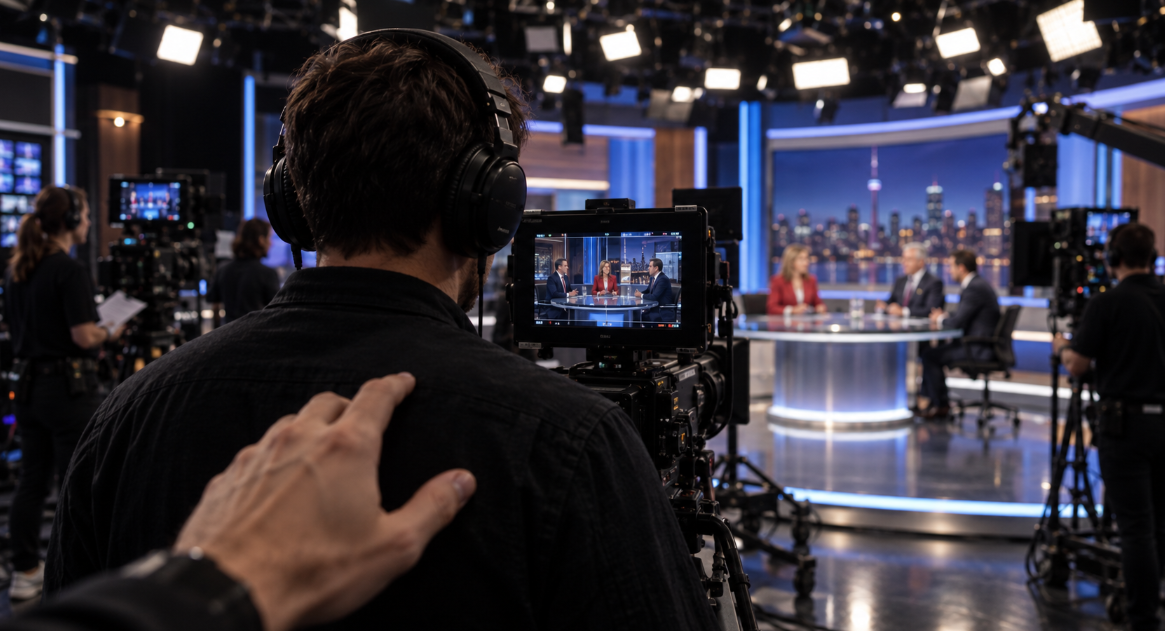
Each article on Frame & Floor separates what is directly visible in an image from what requires reporting, technical explanation or outside confirmation. That distinction helps readers understand both media craft and media limits.
The supplied photographs on this site show studio environments, camera positions and audience perspectives. They support articles about production, framing, interpretation and the workings of live media spaces.
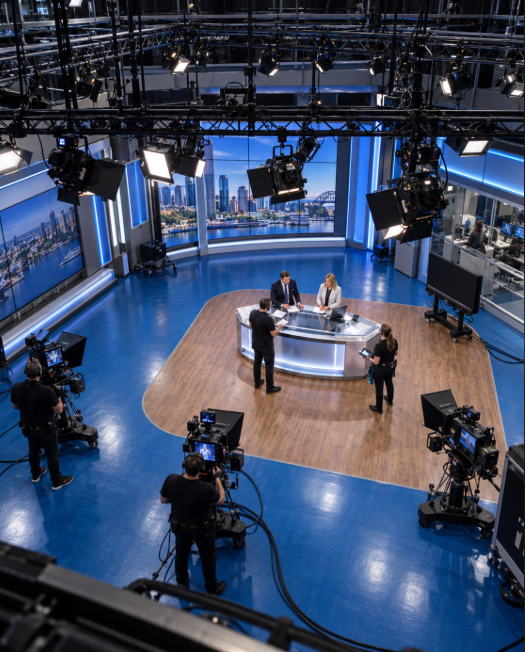
Modern studio ceilings carry key lights, fill sources, practical fixtures and rigging for flexible scene changes. Their position must balance image quality with clear working space below.
A typical segment moves through planning, scripting, blocking, technical rehearsal and final timing before broadcast. Every step reduces uncertainty once the live clock starts.
Field monitors and return screens give operators reference points for framing, focus and the selected output. They help a team stay coordinated during transitions.
Good studio work is often invisible. Clean changes between hosts, guests and wide shots create confidence and keep attention on the subject rather than the mechanics.